Wrought Iron Gates in Austin, TX
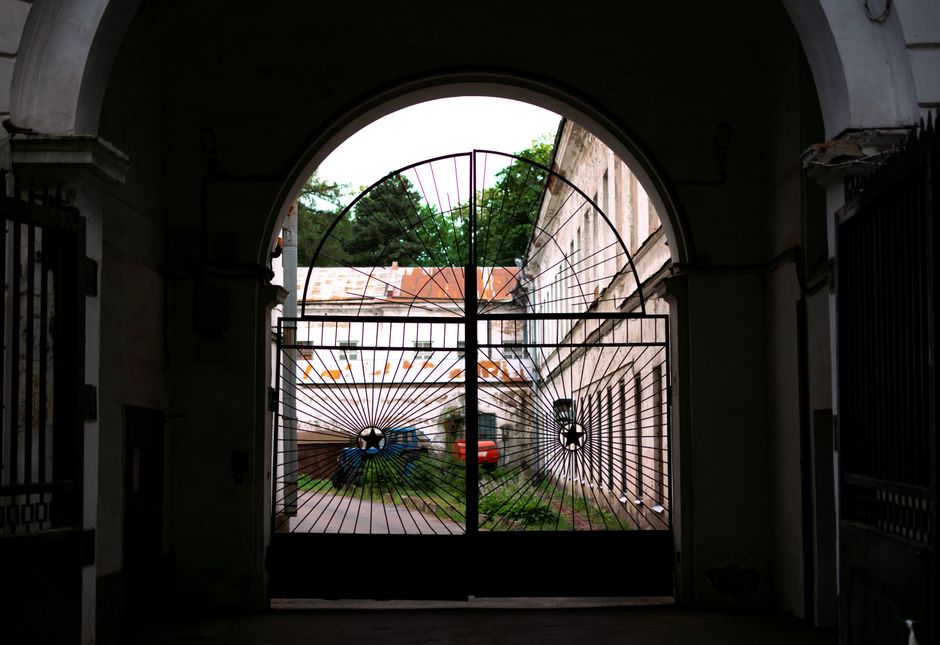
Practical notes from the crew on wrought iron gates in Austin, TX, covering scrollwork, rust, hinges, posts and finishes for older homes.
What We Cover
- Hinges and Gate Posts That Keep an Old Gate Hanging True Why an old iron gate sags, how clay soil moves the post, and what the crew checks on hinges and footings.
- How Rust Starts on Iron Near Lady Bird Lake and Creeks Where moisture collects on wrought iron gates in Austin, and how rust begins at joints, hinges and picket bases.
- Matching New Iron to an Old Gate Section How a welder repairs or extends an aged wrought iron gate so new pickets and scrolls read as original.
- Powder Coat or Paint for Ornamental Iron How powder coat and field-applied paint differ on wrought iron gates, and which suits old ornamental work in Austin.
- Preparing Old Iron Gates for Repainting in Austin How a crew strips rust, scuffs sound paint and primes a wrought iron gate before any new coat goes on in Austin, TX.
- Scrollwork Styles for Hyde Park and Clarksville Homes Which scrollwork patterns, finials and picket rhythms suit older bungalows and cottages in Hyde Park and Clarksville.
Wrought Iron Gates in Austin, TX
An iron gate in Austin, TX works hard and gets little credit. It takes sun on the south face, sprinkler spray on the lower rail and the weight of a leaf that swings a few thousand times a year. The notes here come from the work itself, from the bench and the driveway, and they treat a gate as a frame, a set of pickets, a pair of hinges and a post in the ground that all have to stay true together.
Ornament and the old neighborhoods
Scrollwork and finials look simple until a gate is hung in Hyde Park or Clarksville, where porch rails, bar sizes and lot widths all set a scale that the ornament has to respect. A scroll panel too heavy for a cottage porch looks borrowed, and a finial on every picket looks busy. Good work in older blocks like Travis Heights follows the house, matching bar thickness and weld style so the gate looks like part of the street.
Keeping old iron sound
Rust rarely starts on the open face of a picket. It starts at the base where water pools, in the hinge knuckles, along weld seams and inside hollow cut ends. Damp ground near Lady Bird Lake and Bouldin Creek keeps those spots wet longer than a hillside lot does. Wire brushing, a rust-inhibiting primer on bare steel the same day, and a clean finish coat keep a good gate going for decades, and a drop of oil in the hinge helps more than most people expect.
Posts, clay and the ground underneath
Many sagging gates are really leaning posts. Expansive clay moves with the seasons, and limestone along the Balcones Fault changes how deep a footing can go from one block to the next. A crew reads the post first, then the hinges, then the frame, and resets the footing when the ground has moved instead of forcing a leaf back into line.
Guides
The pages here cover surface prep before repainting, scrollwork choices for older homes, where rust begins, how hinges and posts keep a gate hanging true, powder coat against brushed paint, and how new iron is matched to an old gate section.
Latest Guides
A Year of Care for Old Iron Gates in Central Texas
An iron gate in Austin lives through three or four different climates in one calendar year. It bakes in August, soaks in a spring storm, shivers through the odd hard freeze and sits in sprinkler mist through most of the months between. Each of those conditions does a different job on the metal, and the gate asks for different attention in each. A few minutes with a flashlight and a screwdriver at the right time of year does more for old iron than any single big repair.
Why a seasonal routine works better than an annual one
Most owners look at their gate once, usually after something goes wrong. By then a hinge has seized or a picket base has rusted through. The better habit is small and spread out. Iron fails slowly and in predictable places, so a short check keyed to the weather catches each problem while it is still a brush-and-primer job. The calendar below follows the way Central Texas actually behaves, not the way a textbook calendar reads.
Season What the weather does What to check on the gate Late winter Cold nights, damp mornings, occasional freeze Paint bubbles at joints, hinge pins that stiffen, moisture sitting in hollow rails Spring Heavy rain, fast growth, soil swelling Post lean, gate drag, climbing vines on scrollwork, drainage at the bottom rail Summer Long heat, hard sun, dry soil shrinking Chalking finish, gaps opening at latch side, hot-surface touch-up timing Fall Mild days, cooler nights, dew returns Best window for scraping, priming and repainting; sprinkler settings Late winter: what the cold shows up
A gate that has been closed up in damp air since December tells the truth about its paint. Look along every weld and every place a scroll touches a rail. Paint that has begun to lift in a line, or a faint orange stain running down from a joint, means water has found a way in. This is also the time to work each hinge by hand. A hinge that squeaks or catches in January will bind in April once the rain swells the post.
Hollow rail sections deserve a closer look. Tubing that was never sealed at the ends can hold water for weeks, and a hard freeze turns that water to ice and pushes at the seams. A small drain hole at the low end, drilled and primed, lets a hollow bar breathe. It is a ten minute job that stops a problem which otherwise grows unseen from the inside.
Spring: ground and growth
The clay under much of Travis County swells with spring rain, and a post that was true in winter can lean by May. Stand back at the gate and sight along the top rail against a fixed line, such as the eave of the house or a neighbor's fence. A gate that looked level last fall and now shows a wedge-shaped gap at the latch has moved, and the cause is almost always in the ground, not the hinge.
Growth is the other spring job. Jasmine, star vine and roses love old scrollwork, and they hold moisture against the metal all season. A climber is not a problem if it is trained and thinned, but a mat of leaves packed into the curls of a scroll keeps the paint wet for days after a storm. Pull back the vines from the lower third of the gate and from every hinge, and leave air around the metal. Gates in Clarksville and Hyde Park, where mature gardens run right up to the fence line, tend to need this more than newer lots do.
Summer: heat and finish
Summer is the wrong time to paint and the right time to look for chalking. Rub a thumb across the top rail. If a dull powder comes off, the topcoat has begun to break down under ultraviolet light, and the finish is thinning even if no rust has shown. Make a note of it and plan the work for fall. Painting black iron in full afternoon sun leaves brush drag and dry spray, because the metal flashes the coat before it levels.
Dry soil shrinks away from a footing in August, and the gap lets water run straight down beside the post when the first storm arrives. Check the ground around each gate post and pack it back with soil or a bead of flexible sealant where concrete has pulled free. It sounds minor, and it keeps runoff from soaking the base of the post for a whole autumn.
Fall: the working season
Austin autumns give the best conditions for repainting iron: dry air, moderate metal temperature and mornings cool enough to prime without flash drying. Scrape and wire brush anything loose, feather the edges of sound paint, spot prime every bare patch the same day and finish with two thin coats. If a few pickets have rotted at the base, this is when a welder cuts them out and replaces them, since the new steel can be primed and painted before winter damp arrives.
Turn the sprinklers on and watch the gate while they run. Heads that spray the lower rail or hit the hinge side need to be turned a few degrees. Nothing else on this list is as cheap in effort and as effective in practice.
A short list for every visit
- Open and close the gate fully and listen for scraping or a hinge that catches.
- Look under the bottom rail for flaking paint and orange dust.
- Press a screwdriver tip against any suspicious spot. Sound metal rings, thinned metal gives.
- Check that the latch catches without lifting or pushing the leaf.
- Put a drop of oil on each hinge pin and wipe off the excess so it does not collect grit.
- Note the date and what you saw, so the next visit has something to compare with.
Matching the routine to the house
A gate in Tarrytown with deep shade and old oaks behaves differently from a gate on a south-facing lot near the Colorado River, and both differ from one in Mueller with newer soil and young landscaping. Shade means slower drying and more rust at the base. Full sun means more finish wear and faster chalking. A gate in a historic block where the iron has been in place for decades is usually sound in the bars and weakest at the joints, so the routine leans toward hinges, welds and the bottom rail.
Write the checks on a card and hang it somewhere inside the garage, because a routine that depends on memory does not last. Four short visits a year, each tied to the weather, are enough to keep an old gate sound for a very long time.
Old ornamental iron rarely fails all at once, and a few attentive minutes each season will catch nearly every problem while it is still small.

Questions About Reading and Repairing Old Iron Gates
Old gates carry a lot of evidence if you know where to look. The joints, the surface of the bar, the way a scroll was bent and the shape of a collar all say something about who made the gate and how. That evidence matters for anyone with an older home in Hyde Park, Clarksville or Travis Heights, because the right repair for a hand-forged gate is different from the right repair for a factory piece. The questions below are the ones homeowners ask most often when they start looking closely at the iron on their street.
Is my gate really wrought iron?
Often it is not, and that is not an insult to the gate. True wrought iron is a low-carbon iron with threads of slag running through it, and it was made in quantity until the middle of the twentieth century, when mild steel largely took over. Plenty of gates sold as wrought iron since then are mild steel, and the trade uses the phrase loosely for any forged or fabricated ornamental ironwork. The material matters less to the repair than the condition and the joinery, but it is worth knowing before anyone buys matching bar.
A fresh break or a deeply pitted spot gives a clue. Wrought iron shows a fibrous, stringy grain, like split wood. Mild steel breaks crisp and gray, with a fine even texture. A tiny filed notch on a hidden spot, such as the underside of a rail, is enough to see which one you have.
What do rivets, collars and forge welds mean?
Traditional ironwork was joined without an arc welder. A smith could heat two pieces and hammer them together in a forge weld, wrap a hot collar around a bundle of bars and shrink it tight as it cooled, or drive a rivet through a pair of overlapping pieces and peen the end over. A gate with collars that look hand-wrapped and rivet heads that are slightly uneven was almost certainly made this way, and its joints should be treated as part of the design, not as flaws to be ground off.
Arc-welded joints look different. A bead sits on the surface, often ground flat and filled, and the transition between pieces is abrupt. A gate that mixes both, with an old forged frame and a few arc-welded repairs, is common and tells its own story about previous owners. The repair plan should name which joints are original so that nobody dresses them down by accident.
How do I tell if the ornament is cast or forged?
Cast pieces such as leaves, rosettes and some finials come out of a mold and show a faint seam line where the halves met, along with a slightly soft, sandy surface. Forged scrolls are bent from solid bar and often show hammer marks, a taper at the tips and small variations from one curl to the next. When a gate has dozens of identical curls, it was probably bent around a jig. When each curl differs a little, a smith was working by eye.
The difference matters for repair. A cast piece that has cracked usually cannot be welded back well, because cast iron is brittle and reacts badly to heat. It is typically replaced with a new casting or a forged copy. A forged scroll that has rusted through at its tip can be cut back and a new section welded on, then dressed to the original taper.
Why do the pickets on my gate look different from each other?
Hand work leaves small variations, and some are charming. If every picket on a long gate is slightly different in thickness or the points vary in length, the gate was likely made one bar at a time. If a handful of pickets look noticeably cleaner, straighter or a different gauge, those are replacements. Run a hand along the bottom rail and compare the weld beads at the picket bases. Fresh work shows smoother, more regular welds than the older forged joints beside it.
Matching a replacement picket to its neighbors is a matter of caliper work. The new bar should match the old in thickness, corner radius and the shape of the tip, and it should be finished before painting so the repair blends in under a single coat.
What counts as damage and what counts as age?
A light brown patina on exposed iron, a softened edge on a scroll and a little pitting on a surface that has seen a hundred summers are signs of age. They do not need to be removed. Damage is different: flaking scale thick enough to lift in layers, a bar that has lost visible thickness, a joint that moves under finger pressure, or a hole where a rail has rusted through. Those need work.
A fair test is to tap the metal. Sound iron rings. Thinned or rotted iron gives a dull thud. A gate near the Colorado River or low ground around Bouldin Creek, where the base stays wet, will show the worst of it on the lowest eight inches. A gate on higher ground near Mount Bonnell often keeps its lower bars in better shape, though its upper rails may have taken more sun.
Can an old gate be altered without losing its character?
Usually, yes, if the changes stay out of sight. Adding a self-closing hinge, a quieter latch or a new gate post footing does not change the design, and many historic gates have had such changes for decades. Cutting down a gate to fit a new opening, replacing scrolls with a different pattern, or covering original ironwork in a thick textured coating all change what the gate looks like, and those are harder to reverse.
In districts with design review, changes visible from the street can fall under a historic preservation process. Rules vary by property and by district, so the owner is better off checking with the neighborhood association or the city before anything is cut, rather than after.
Is repair or replacement the better path?
When the frame is sound and the damage is at the base, repair almost always preserves more of the gate. Cut out the failed bar, weld in new stock, grind and prime. When the frame itself has racked or the main rails are thin throughout, a new gate that copies the original profile may serve the house better than a series of patches. A crew measuring the old gate with a template, a rubbing of the finials and a photo of the scroll pattern can reproduce the design faithfully, and the original can be kept as a reference or reused in another location on the property.
What should I photograph before any work starts?
Take pictures of the full gate straight on, then close-ups of each type of joint, each different finial, the hinges, the latch and the base of each post. Add a measuring tape in some shots to show scale. Photos protect the original design if a repair goes wrong, and they give a welder a record of the pattern for matching new pieces. They also help when a neighbor asks what the gate used to look like.
A gate that has hung on the same post for eighty years has already proved its design, so the safest plan is to repair what has failed and leave the rest alone.